"A community in which each person is accepted and nurtured, and strangers are welcome..." Advices & Queries, no. 18
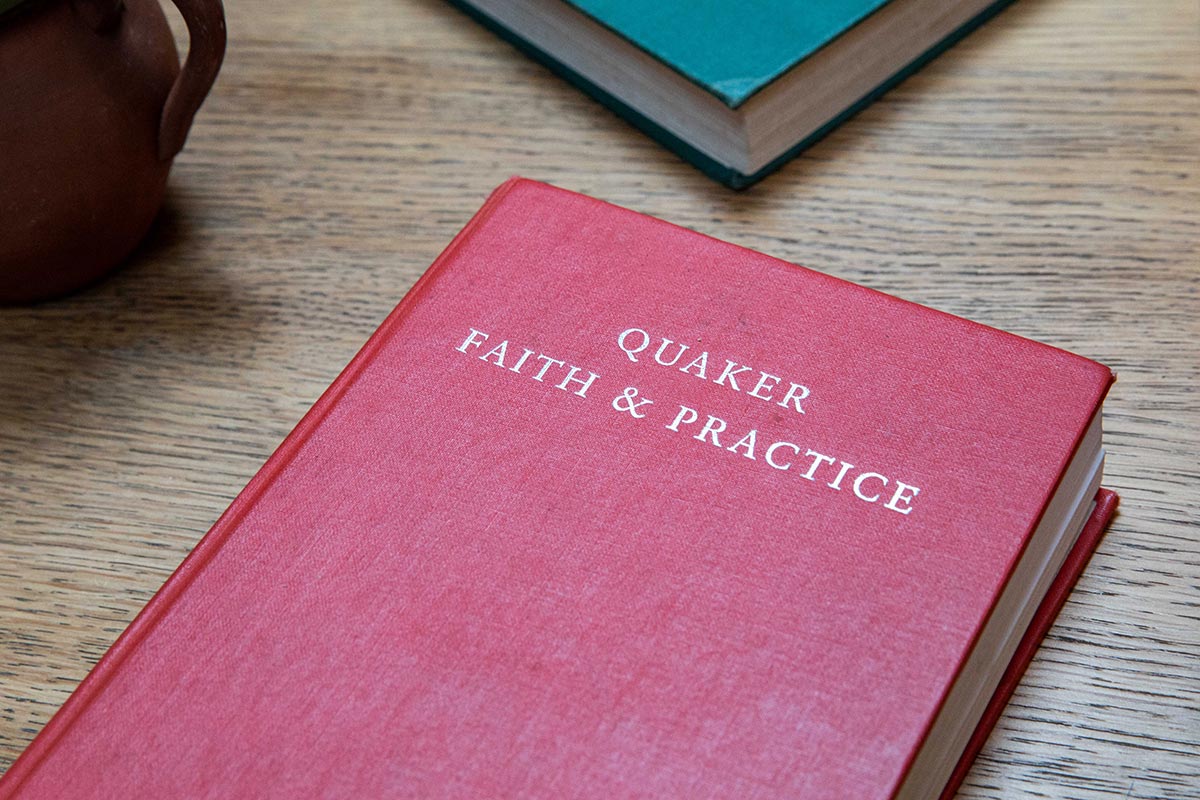
You do not have to be a Quaker to come to a Quaker Meeting – all are very welcome. Often the best way to learn more about Quakers is to experience Quaker worship for yourself. Ours is an experience-based faith not demanding anyone ascribe to a fixed set of beliefs or dogma, but rather defined by an inclusive way of spiritual seeking rooted in the conviction that it's possible for every person to experience the divine, creative force that gives meaning to life and binds us together, and to be led by it. When you're ready, please come and join us.
Our spiritual practice has led generations of Quakers to try to live simply and sustainably, promoting peace, equality and truth. Putting faith into action is central to our way of life and we meet weekly for quiet worship, usually on Sunday, in more than 475 locations across Britain.
A helpful site with introductory material is Discovering Quakers.
Newcomers Group
At Hampstead we host a group for newcomers with coffee and croissants at 10.00am on the 3rd Sunday of the month. We are currently discussing the Quaker testimonies of simplicity, equality, peace, truth and sustainability, and how we might express them in our lives today. The conversations are lively and friendly and it is as much about getting to know one another as exploring Quaker faith. You are more than welcome to just show up, but if you have any questions and would like speak to someone beforehand, you can use our contact form and we are happy to respond.
Becoming Part of Our Community
Once you've begun attending Meeting at Hampstead, here are a few additional steps you may take to further that connection:
- We publish a weekly email with notices of upcoming events and other timely information, as well as a seasonal newsletter. You may subscribe to either or both by filling out a data consent form in the lobby of the Meeting House, or selecting the option, Subscribe to Mailing List, on our contact form.
- Hampstead is also on the Quaker Meetings Network, an online platform created by Friends for Friends, which supports the work of our Meeting with digital tools for collaboration. By following this link, you can register yourself and we can then provide you with access to this shared space, which includes an archive of our Business Meeting's minutes.
- Finally, we encourage you to fill out this Interests & Experiences Questionnaire, so that we can get to know more about you and be well informed to discern a role that provides an opportunity for you to give meaningful service to the Meeting.
A Quaker Meeting for Worship: What’s it like?
Quaker worship is a shared, mostly silent seeking of the inward Light.
“What is the ground and foundation of the gathered Meeting? In the last analysis, it is, I am convinced, the real presence of God.” Thomas Kelly
Quaker worship is difficult to describe; the best way to find out what it is like is to experience it first hand. Newcomers are welcome at our local meetings which are generally held on Sunday mornings. Friends will greet you there and can answer any questions.
Quaker meetings for worship begin when the first person to arrive has sat down in silence. As others join the meeting, we move into silent worship together. There is no pre-arranged order of service and, on each occasion we meet, the shared silence can take on a life of its own. This means that a newcomer or visitor cannot take one or two Meetings as typical: the serious enquirer should stay with us awhile. Silence for Friends is not merely stillness or the absence of sound. A living silence is a time for listening, a time for self-surrender, a time for a deep sense of fellowship with one another and an opportunity to experience the presence of God (whatever “God” may mean to each individual).
The experience of worship is difficult to explain in words, especially as not all Quakers feel able to express themselves in formal religious language. Worship itself, however, seems to call for, or imply, a sense of transcendence and most Friends feel comfortable with talk of the Spirit, that is, ‘our selves in the depth of what we are…this place where God and me mingle indistinguishably’ (Harry Williams, quoted by George Gorman, ‘The Amazing Fact of Quaker Worship’ p. 105).
Sometimes a meeting is entirely silent, but more commonly in most meetings, from time to time the silence is broken when someone feels led to speak. ‘Spoken’ ministry (as we call these contributions) may take many forms. It could be sharing an experience, a question that has exercised the inner self, an affirmation, a reading, teaching or a prayer. There is no prescription or pattern for spoken ministry and no limitation on who may speak.
A meeting for worship differs from a meeting for learning, which is the proper setting for contributions which just stimulate discussion or artistic or intellectual pursuits. Also, it is generally not helpful to air personal problems in spoken ministry in the expectation that Friends will explore them for therapeutic purposes. Our hope is that all spoken ministry will be given with sensitivity to the life and spirit of the local meeting and will be inspiring and uplifting to some or all of those attending.
You may also click on How Quakers worship to get a further sense of Quaker Meetings.
Further Information and Resources
• Quaker-related Podcasts
From their earliest pamphlets, Quakers have a long tradition of using the media of their day to get their message out, and today's Friends are no exception. Thee Quaker Podcast, Quakers Today, The Growing Edge and The Seed: Conversations for Radical Hope are among the best of an impressive range of such endeavors. Discovering Quakers, mentioned above, has released its own podcast, Quaker Activism!, and London's Development Officer, Josh Selfe, has teamed up with Woodbrooke's Rhiannon Grant on a new series called The other side of silence.
By telling inspiring stories about the worship and witness of Friends, these efforts are having an incredible effect in countering the lack of knowledge and misconceptions that have persisted about Quakers. Each one is well worth checking out!
• Quaker Special Interest Groups & Recognized Bodies (QRBs)
Friends come together around many and diverse special interests, concerns and shared affiliations. These groups offer community and the chance to have a positive impact outside of your local meeting.
For example:
- Quaker Action on Alcohol and Drugs (QAAD) works within Quaker principles to address the use and misuse of all substances, legal, illegal and prescribed, and gambling. They offer advice and information to individual Quakers and to elders and overseers. QAAD fosters links between Quakers who share their concern through a conference at Woodbrooke and meetings of the QAADNET group. QAAD publishes the quarterly magazine QAADRANT, and provides speakers for meetings on request. They also work responsively with young Quakers to develop sessions for any kind of gathering. Externally, QAAD contributes to government reviews and liaises with other faith groups to advance policies that reduce harm.
- The Nontheist Friends Network aims to provide a forum and supportive framework for Friends who see religion as a human creation. They explore theological and spiritual diversity and their practical implications in respectful acceptance of different views, experiences and journeys. They share a radical questioning approach to contemporary religion. Events include an annual weekend residential conference at Woodbrooke and other regional and local events. They have contacts with Quakers in the United States, Australia and Europe, as well as non-Quaker networks.
• Quakers on Social Media
While Friends increasingly share a concern about the impact of social media and the power of Big Tech, the Quaker Facebook Group aims to be a supportive, friendly community space to share news and discuss the challenges and joys of being a Quaker. More information here (on Facebook). This group now has over 1000 members. There is also a long-running and active subreddit for and about the Religious Society of Friends: www.reddit.com/r/Quakers/
• Help in a Pinch
The Pollard and Dickson Trust offers hardship grants of up to £1,500 for any member or attender. Quakers in Britain make grants of up to £750 to improve the quality of life for Friends affected by long-term unemployment or unable to make a living wage, as well as grants up to £4000 to support the move from unemployment to self-employment for those intending to set up a new business. Additionally, William Gunn's Charity for Quakers in Need welcomes requests for grants to assist individuals who are in formal Membership of the Religious Society of Friends in Britain and are in need.
If you are experiencing hardship and are in need of upholding please don't hesitate to speak with a member of the Oversight Team (who can be identified by their photos in the foyer).